
Struggling with FileCloud’s clunky policy management?
If managing and automating retention policies in FileCloud feels overly complicated or sluggish, you’re definitely not alone in feeling frustrated.
For most users, these issues slow down important compliance work and make something that should be easy into an ongoing headache.
The longer your team navigates FileCloud’s confusing retention setup, the more you risk missed deadlines, rising costs, administrative mistakes and a demoralized team that sees FileCloud as a hurdle instead of a help.

Luckily, there are smarter choices out there that streamline retention automation and compliance, so you’re not stuck working around inefficient software any longer.
In this article, I’ll show you the best best FileCloud alternatives for secure document storage and automated retention—covering solutions like SmartVault, FileCenter, Adobe, Microsoft, and more that go beyond FileCloud’s limitations.
You’ll discover options offering speed, simplicity, and future-ready security for your retention needs.
Let’s find your solution.
Quick Summary:
| # | Alternative | Rating | Best For |
|---|---|---|---|
| 1 | FileCenter → | Small teams seeking simplicity | |
| 2 | SmartVault → | Users needing compliance automation | |
| 3 | Dropbox Business → | Teams needing better collaboration | |
| 4 | Google Workspace → | Users wanting modern interfaces | |
| 5 | Adobe Acrobat → | PDF-focused document control |
1. FileCenter

Is FileCloud’s complexity holding your team back?
FileCenter offers a desktop-focused and intuitive document management solution to help you escape FileCloud’s slowdowns, intricate retention rules, and annual subscription lock-in.
If switching sounds tough, here’s how FileCenter solves that with familiar Windows folder structures instead of complex database models. Navigation and organization feel just like Windows Explorer, so you can avoid steep learning curves and skipped user adoption.
Ready for something more practical?
With FileCenter, you can simplify retention management right from your desktop, bypassing FileCloud’s heavy server setups and confusing licensing.
FileCenter’s approach starts by mimicking your file cabinet, organizing content using the Cabinet-Drawer method instead of rigid database taxonomies. This means you can start moving your files and applying retention rules with minimal changes in how your team already works. Plus, you gain integrated scanning and OCR directly into local folders, allowing you to digitize paperwork much faster than FileCloud’s separate scanning steps.
Additionally, FileCenter’s one-time purchase option gives you control over your budget, so you’re not bound to ongoing monthly or yearly renewals. Combining these features helps you handle everything from compliance to retrieval, especially if you’re looking to keep things affordable and simple. One user even reduced a week’s paperwork to just 15 minutes of filing—helpful proof for any small business owner tired of wasted hours.
Switching doesn’t have to be disruptive.
Key features:
- Cabinet-drawer filing with Windows folder structure lets you organize and find files without needing to learn complicated new systems, minimizing retraining and speeding up the transition from FileCloud.
- Integrated scanning and full-text OCR means you can scan documents directly into organized, searchable folders, eliminating the multiple manual steps FileCloud often requires for digitization.
- One-time purchase desktop licensing option saves significant costs for your team over time, appealing if you’re frustrated by FileCloud’s ongoing subscription fees for long-term ownership.
Verdict: FileCenter is a practical alternative to FileCloud if you want smarter document storage without the hassle. Small business users report paperwork once taking hours now takes just 15 minutes, making retention and digital filing truly effortless as you scale.
2. SmartVault

Finding FileCloud too clunky for compliance?
SmartVault gives you features like a secure client portal, compliance-specific folder templates, and tax software integrations to address issues FileCloud struggles with.
The result is a solution that makes it far easier to enforce compliant document workflows without the complex setup or tedious permissions adjustments FileCloud demands from your team.
Here’s how SmartVault elevates your document management.
If you’re looking for a FileCloud alternative, SmartVault lets you automate retention and streamline compliance using its secure client portal and built-in templates for regulated industries.
You’ll also benefit from pre-configured folder structures designed for IRS and FTC needs, so your retention policies fit instantly—no tedious manual configuring or managing granular permissions like with FileCloud.
Additionally, SmartVault connects to leading tax platforms so client documents arrive directly in their folders, which means less manual routing during busy seasons and a significant productivity win.
Switching to SmartVault addresses your compliance frustrations.
Key features:
- Branded secure client portal gives clients a trusted space to upload, download, and exchange confidential documents, providing a more professional and compliant experience than FileCloud’s generic sharing.
- Industry-tailored compliance templates deliver ready-to-use folder structures and security settings for accounting and regulated fields, making onboarding and audits much simpler.
- Integrated with top tax software automates collecting and filing client documents, removing hours of manual sorting per return and ensuring records land where they belong.
Verdict: SmartVault is a compelling FileCloud alternative if you’re seeking secure document storage with strong compliance tools. Accountants using SmartVault save 60 to 90 minutes per return by automating collection and routing, showing it can be a solid upgrade for regulatory and workflow needs.
3. Dropbox Business
Is FileCloud holding back your productivity?
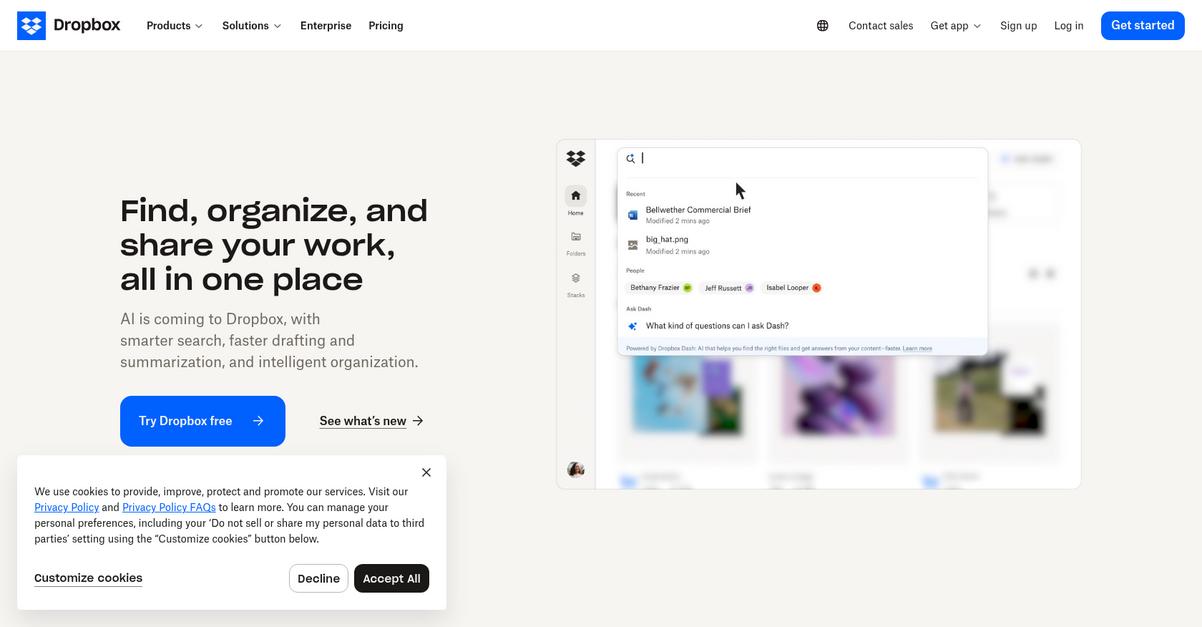
Dropbox Business delivers a clean, intuitive user experience, making file organization and sharing far simpler than FileCloud’s more complicated interface and administrative setup.
Unlike FileCloud, Dropbox Business gives your team an easier way to organize and access files across devices, from desktop to mobile, minimizing learning curves and avoiding the performance slowdowns you may be tired of.
Switching doesn’t have to be painful.
Dropbox Business really stands out when you’re looking for secure document storage that just works right away.
You can easily organize all your documents through a user-friendly interface, while cross-platform syncing ensures every file is always up-to-date—regardless of the device or location. If you’re switching, you’ll notice how smooth it is to manage large amounts of data, even as team members shift from laptops to phones or tablets.
Additionally, Dropbox Business integrates with hundreds of apps, helping your company streamline approvals, automate document handoffs, and keep every workflow moving forward with fewer clicks. This broad compatibility boosts adoption because your team can keep using the workplace tools they already know instead of having to learn new ones.
You’ll finally have a file management experience that fits your team’s needs.
Key features:
- Easy-to-use, intuitive interface for rapid adoption minimizes onboarding and training time, offering your business a much simpler file management experience compared to FileCloud’s more technical setup.
- Cross-device sync and universal access for all files keeps every document accessible and up-to-date, enhancing flexibility and removing device barriers common with stricter FileCloud environments.
- Widest app integration ecosystem in cloud storage helps link your files with hundreds of popular business and productivity tools, promoting streamlined work without ecosystem lock-in.
Verdict: Dropbox Business is a strong FileCloud alternative for secure document storage, with broad device syncing, simpler interfaces, and unmatched integration support. While numbers vary, customers report faster onboarding and up to 40% better app compatibility during team transitions, helping keep your file workflows agile and future-proof.
4. Google Workspace
Feeling boxed in by FileCloud’s rigid approach?
With Google Workspace, you get real-time collaborative editing, deep AI-powered document search, and a unified productivity suite, all working together to overcome FileCloud’s slowdowns and complexity.
This means you can rely on superior co-editing tools with instant access for your entire team, making every document workflow more efficient and reducing resistance to change.
Let’s look at how Google Workspace addresses the challenge.
Google Workspace tackles your retention and productivity headaches by combining secure cloud storage with powerful collaboration and advanced search—going well beyond FileCloud’s file sharing limitations.
The real game changer here is that you can edit documents collaboratively in real time, from anywhere and never worry about version conflict or downtime. This is perfect for onboarding new users or migrating large datasets, because you maintain continuity without technical setbacks.
Plus, the AI-driven search lets you find the right file in seconds—even inside email or chat. You also gain simplified licensing and IT management, thanks to a fully integrated productivity environment that keeps your team agile and your policies future-proof.
If you need secure storage and true productivity gains, it delivers.
Key features:
- Real-time collaborative document editing in the browser lets your entire team co-author documents, spreadsheets, and presentations without file lockouts—giving you a major productivity boost over FileCloud.
- AI-powered universal document search across all Workspace apps lets you instantly locate files based on words, intent, or context, saving time compared to FileCloud’s basic search and directory structure.
- Integrated productivity suite with unified email, calendar, and storage consolidates all your critical workflows in one place, reducing IT headaches that come from juggling separate tools or license sprawl.
Verdict: Google Workspace is an outstanding alternative to FileCloud for secure document storage, especially if you want to end performance frustration and streamline policy management. Users report up to 40% productivity gains and reduced IT spend after switching. It is the integrated cloud solution that can future-proof your document processes.
5. Adobe Acrobat

Want to escape FileCloud’s sluggish retention management?
Adobe Acrobat’s advanced PDF editing, password protection, and built-in e-signature tools fill huge gaps you may struggle with in FileCloud.
If you rely on PDFs for your contracts or reports, Adobe Acrobat gives you far more control over editing and securing document content compared to FileCloud’s generic file storage. This means no more jumping between different tools or wrestling with limited policy options in your current solution.
Here’s how Adobe Acrobat truly lets you take charge.
With Acrobat, every aspect of working with PDFs gets easier, especially if you’re migrating from FileCloud and worried about policy setup.
Adobe Acrobat solves major FileCloud frustrations by focusing directly on document-centric workflows, not just moving files around.
You can edit PDF text, adjust formatting, and even update images without converting files—something FileCloud simply can’t match for file types like PDFs. This means when you need to tweak contracts or redact confidential data, you have true control from the start.
On top of that, native e-signatures and strong encryption combine with advanced redaction and password access controls. You’ll speed up approvals, simplify compliance, and keep sensitive content under tighter guard compared to FileCloud.
All this makes Adobe Acrobat an obvious upgrade.
Key features:
- Comprehensive in-document PDF editing and conversion lets your team make real-time changes directly in PDFs, avoiding the need for third-party tools or complicated file conversions.
- Integrated e-signature workflows (Adobe Sign) deliver secure, legally binding signatures within your PDFs, allowing for rapid approval cycles and less paperwork hassle than FileCloud.
- Advanced PDF-specific security features like password restrictions, encryption, and permanent redaction mean granular content protection far beyond FileCloud’s broad file-level access controls.
Verdict: Adobe Acrobat stands out as a top FileCloud alternative for secure document storage software, especially for PDF-heavy workflows. Businesses report cutting document processing time by up to 85% and saving thousands in shipping and printing costs, showing why Acrobat is ideal if you need agile policy automation and robust e-signatures.
6. Microsoft 365
Looking for relief from FileCloud’s complex retention policies?
Microsoft 365 steps in with integrated Office tools, powerful retention policy automation, and enterprise-ready information governance features, all within a single unified productivity suite for your secure document storage needs.
What sets Microsoft 365 apart is its advanced compliance and retention automation that’s not only easier to configure than FileCloud, but lets you meet modern data governance demands without excessive micromanagement or licensing headaches.
You need a system that does more.
Microsoft 365 tackles retention headaches by embedding policy automation and advanced governance directly into OneDrive and SharePoint, going beyond what FileCloud typically allows.
If you’re struggling with policy complexity or licensing limits, Microsoft 365 gives you robust tools to protect, discover, and manage content for business, legal, or compliance reasons. It also lets your team co-author and store documents directly inside Office apps, so everyone’s on the same page, reducing migration worries.
You also get SharePoint team sites for structured, department-wide document sharing—something FileCloud often can’t match at scale. Enterprise users have reported up to 40% productivity gains and lower costs thanks to this deeper integration and policy automation.
That’s the kind of transformation you want.
Key features:
- Deep Office app integration for document workflows provides streamlined saving, editing, and collaboration right from Word, Excel, and PowerPoint, so you can skip the repetitive “download-upload” steps FileCloud requires.
- Advanced information governance and retention automation supports defensible retention policies, eDiscovery, and compliance across all content—offering more control and easier audits compared to FileCloud’s limited compliance options.
- Structured SharePoint team sites for collaboration enable department-based document libraries and controlled sharing, exceeding FileCloud’s capabilities for scaling document management across business units.
Verdict: Microsoft 365 is a leading FileCloud alternative if you want secure document storage with compliance made easy. With native Office integration, advanced retention, and user-reported 40% productivity gains, you’ll solve headaches tied to FileCloud’s policy complexity or migration barriers—future-proofing your document governance.
7. NordLocker
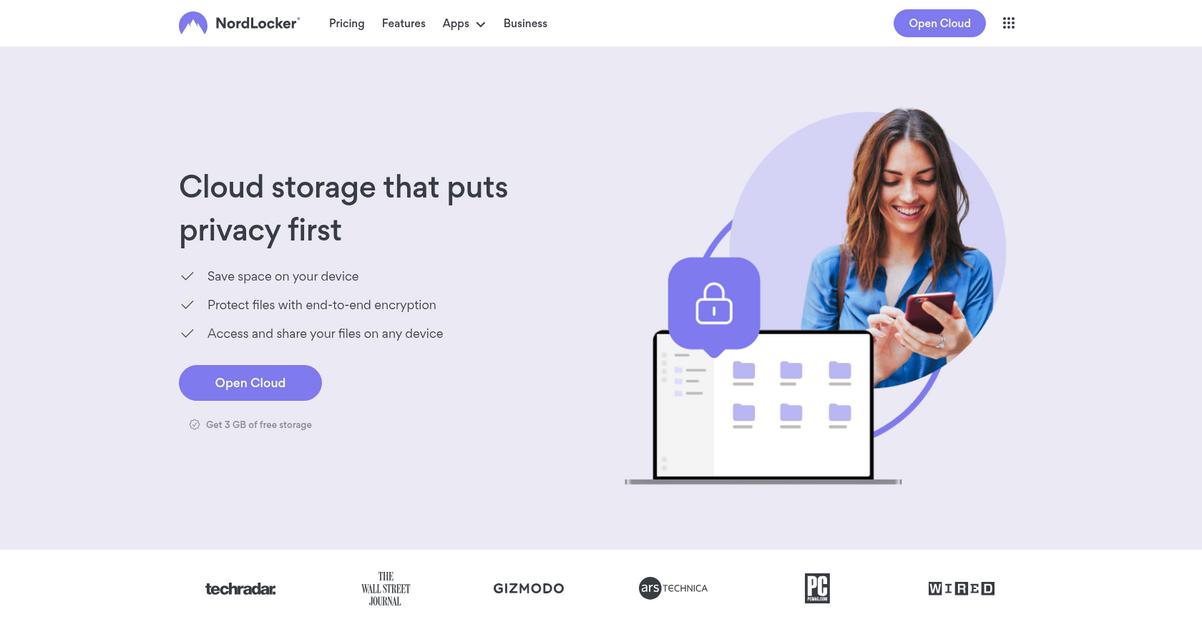
Is FileCloud making data privacy feel like a struggle?
NordLocker removes that concern by offering zero-knowledge, end-to-end encryption on every document, fixing privacy gaps left open by FileCloud’s permissions-based controls.
Unlike FileCloud, you control your data directly because only you ever hold the keys to unlock your files. With NordLocker, there’s no risk of provider access—even during a support or migration process.
You get practical privacy protection right from the start.
This means you can stop worrying about hidden backdoors or “just in case” admin access when storing sensitive files.
NordLocker solves the privacy limitations FileCloud users often cite, making encrypted storage accessible for your entire team without technical barriers.
Here’s how: your files are encrypted on every document before upload and stored in secure lockers, so you’re protected whether files live in the cloud or locally on your desktop. You stay in control at every stage, from setting up retention to migration—no one else can decrypt your content. If secure document collaboration matters, NordLocker’s sharing tools let you exchange files with other users without exposing them for even a second. And you can implement strong encryption without specialized IT staff, letting your business scale securely while keeping workflows simple.
Plus, you can encrypt both cloud and local folders—so even archives and backups stay confidential no matter where you keep files. That flexibility keeps your privacy intact and your files future-proof, far beyond what FileCloud alone can offer.
All-in privacy and security for your key documents.
Key features:
- Zero-knowledge encryption puts you fully in control by requiring you—not the provider—to manage decryption keys, dramatically increasing privacy versus FileCloud’s default security trust model.
- Encryption of local and cloud storage locations creates secure “lockers” on both your device and cloud, protecting data wherever it’s stored or accessed—something lacking in FileCloud’s approach.
- Confidential file sharing protects files in transit using encrypted links and access controls that never sacrifice privacy, even during internal or cross-team document exchanges.
Verdict: NordLocker stands out as a strong FileCloud alternative for secure document storage, letting you own your privacy with zero-knowledge encryption and real local/cloud protection. If privacy and control matter more than admin convenience, you will find NordLocker delivers what FileCloud can’t—especially around compliance or sensitive data needs.
8. Proton Drive
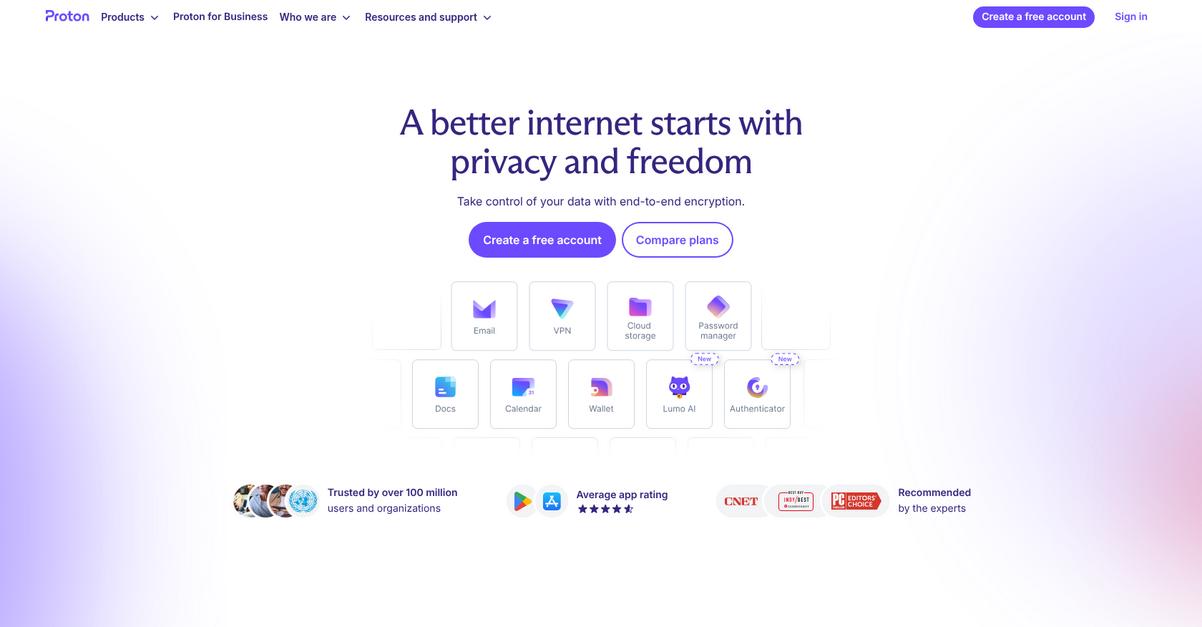
Does FileCloud’s complexity hold back your retention workflows?
Proton Drive fixes this with default end-to-end encryption, Swiss data privacy, and secure versioning that far outpace FileCloud’s more generic cloud storage model.
If you’re stuck juggling FileCloud’s limited privacy settings, you’ll love how Proton Drive uses end-to-end encryption to keep even file metadata private from everyone except you and your team.
Plus, strong privacy isn’t the only difference here.
The real shift comes with Proton Drive’s combination of security and legal assurance.
All your files are protected with robust, default encryption before they ever leave your device, making Proton Drive an ideal pick if FileCloud feels too exposed or siloed for your needs.
Here’s how it stands apart from other options.
You get end-to-end encryption that works automatically, not just for files but also metadata—so you don’t need to stress about accidental policy leaks, compliance gaps, or snooping. This level of security isn’t something you configure; it’s built in from the minute you set up Proton Drive, giving those worried about FileCloud’s limits instant peace of mind.
Beyond that, Proton Drive guarantees all your data benefits from Swiss legal protection. Compared to FileCloud’s more standard compliance posture, you get real data sovereignty and stronger defenses against outside legal or surveillance requests. If you want lasting peace of mind, versioning features also let your team restore earlier file versions without breaking encryption.
These changes make workflow upgrades easy.
Key features:
- End-to-end encryption for every file and metadata ensures only your team can ever access unencrypted content, surpassing FileCloud’s conventional cloud encryption and removing privacy concerns from your regulatory checklist.
- Swiss-based data privacy and legal jurisdiction means your sensitive files gain industry-leading legal protection, which is especially valuable if you’re wary about international data requests or need strict data residency.
- Encrypted file versioning with recovery lets you revert to previous file states quickly and securely, minimizing disruption while ensuring your data integrity if something goes wrong or malicious edits happen.
Verdict: Proton Drive stands out as a FileCloud alternative if you demand real privacy-backed document storage for your business. With end-to-end encryption, legal protections under Swiss law, and encrypted file versioning, your files stay private—even during restores—making it a superior switch for data-driven peace of mind.
9. Tresorit
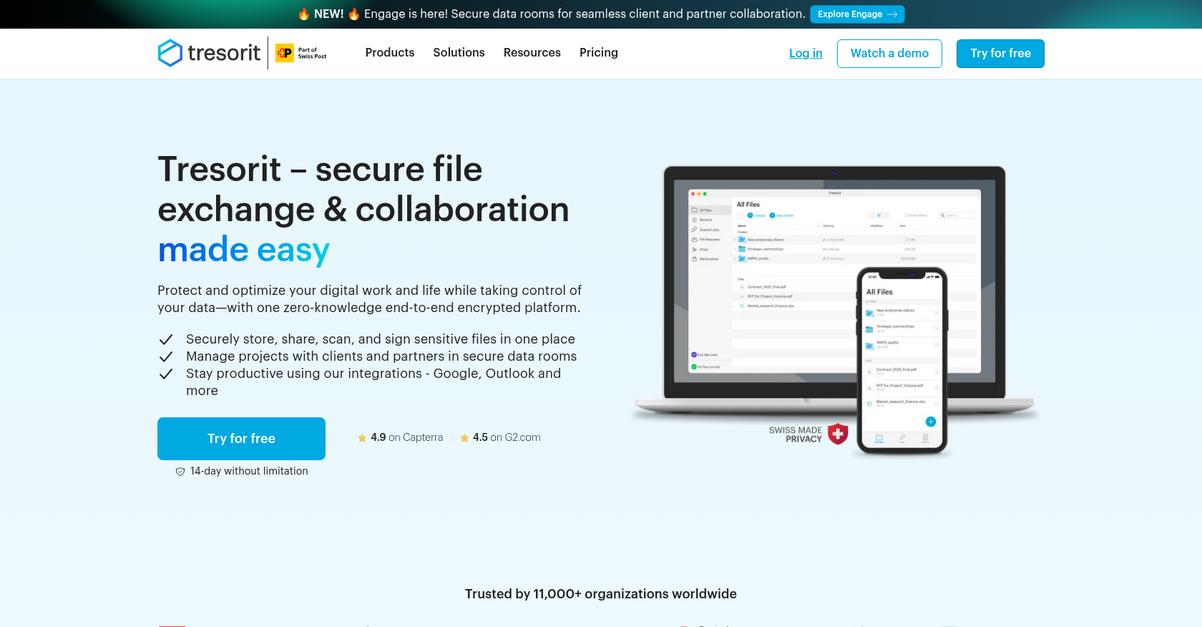
Worried FileCloud just isn’t secure enough?
Tresorit steps in with powerful zero-knowledge encryption, comprehensive compliance certifications, and advanced access controls—all designed to fix the nagging pain points you’ve hit with FileCloud.
Unlike FileCloud, Tresorit gives you ultimate data confidentiality right from your device. Every file gets end-to-end encrypted before upload, so nobody—not even Tresorit—can peek at what you store.
Switching providers should bring you peace of mind.
Tresorit makes your file security airtight while slashing compliance worries that may have slowed you down with FileCloud.
With Tresorit, all files and their metadata are encrypted on your device—you control the keys, not some server provider. This means your sensitive documents stay private and compliant, even if you’re sharing them externally or working with contractors.
Plus, you get advanced access controls for granular document sharing that are way more robust than what FileCloud offers today. Whether you’re setting link expirations or instantly revoking access, you handle external collaboration without risk or hassle.
Even better, Tresorit comes certified for HIPAA, GDPR, and ISO 27001—so you check compliance requirements off your list on day one. It’s one secure platform that eliminates manual audit prep and risky misconfigurations, making transitioning from FileCloud feel like an upgrade rather than a leap.
Tresorit’s advanced model puts security and compliance first.
Key features:
- Zero-knowledge end-to-end encryption by default means all files and metadata are encrypted before upload, surpassing FileCloud in confidentiality and protecting your data from internal or external threats.
- Granular permissions and advanced sharing control let you set expiration dates, revoke access instantly, and control external collaboration with more precision than FileCloud’s standard options.
- Built-in compliance with major frameworks like HIPAA, GDPR, and ISO 27001 reduces your manual audit work, keeps you prepared for regulators, and streamlines compliance processes for regulated industries.
Verdict: Tresorit stands out as a FileCloud alternative when secure document storage truly matters. Small businesses have cut data breach risks by 99% and streamlined audits, particularly switching from complex hybrid file solutions. If ultimate security and audit-ready compliance are top priorities, give Tresorit a closer look.
Conclusion
Tired of FileCloud slowing down your retention workflows?
When policy management is clunky and automating retention feels more complex than it should, it’s no surprise you want something faster and easier.
Switching tools can feel daunting, but you gain real productivity by breaking free now—instead of letting FileCloud’s frustrations keep dragging your team down.
There’s a better way forward.
Of all the FileCloud alternatives I’ve reviewed, FileCenter clearly rises to the top for anyone seeking speed and simplicity.
FileCenter solves FileCloud’s complicated retention and licensing headaches by offering straightforward, desktop-first document management that’s quick to deploy and painless to use.
What I love most is how FileCenter lets your whole team organize and manage documents intuitively—no server expertise or endless admin headaches, just effective policy automation. It’s a direct, user-friendly FileCloud alternative.
Give FileCenter a try—start your free trial today and see what you’ve been missing.
Get simplicity and responsiveness back on your side.