

Feeling stuck with M-Files complexity?
The confusing interface, inflexible workflows, and expensive licensing can make M-Files feel more like a burden than a true document management solution.
These frustrations can cripple efficiency and stall your business’s growth when you’re trying to manage important files at scale.
Over time, wasted hours add up, draining your budget and patience while your team fights a system that’s supposed to simplify, not complicate, everyone’s workday. Staying with M-Files often means you’re signing up for higher costs, reduced productivity, and growing team frustration.

But you have real options—many file management tools now make document workflows dramatically easier to manage without the headaches M-Files causes.
In this article, I’ll walk you through the best best M-Files alternatives for file management software, featuring proven solutions like FileCenter, Dropbox, Laserfiche, DocuWare, and more.
The right replacement brings lower costs, simpler interfaces, and smoother collaboration than you ever got from M-Files.
Let’s find your solution.
Quick Summary:
| # | Alternative | Rating | Best For |
|---|---|---|---|
| 1 | FileCenter → | Users seeking familiar simplicity | |
| 2 | Box → | Teams needing better collaboration | |
| 3 | DocuWare → | Businesses wanting process automation | |
| 4 | Dropbox → | Small teams seeking simplicity | |
| 5 | Google Workspace → | Users wanting modern interfaces |
1. FileCenter

Tired of M-Files making file management complicated?
FileCenter uses familiar Windows-style folder structures, allowing you to organize documents intuitively and instantly—no steep learning curve or complex database setup like M-Files.
It’s especially helpful if your team is tired of navigating M-Files’ rigid metadata and workflow requirements, since FileCenter’s cabinet-drawer-folder interface removes barriers to quick adoption and boosts productivity from day one.
You can feel the difference immediately.
FileCenter stands out by ditching metadata-only organization, instead letting you work inside a natural folder setup that feels like an extension of Windows Explorer.
Additionally, FileCenter tackles document scanning and organization head-on. Its integrated PDF and OCR tool lets you scan paper documents right into digital folders with automatic text recognition. This makes digitizing paperwork a simple, one-step process—something that can take much longer with M-Files’ more complex scanning and capture integrations.
Plus, if you use a variety of Windows apps, FileCenter makes it easy to save documents directly into your chosen folder structure, bypassing any “check-in” hurdles and giving you universal flexibility that fits how your team already works.
You get the simplicity and control you’ve been missing.
Key features:
- Cabinet-drawer-folder interface with Windows folder navigation provides a super familiar structure, eliminating the training headaches and steep learning curve that users experience when adapting from M-Files’ metadata-first design.
- Integrated PDF scanning with automatic OCR and filing lets you digitize and convert paperwork in a single step, so your physical documents are instantly searchable with almost no setup effort.
- Direct save from any Windows app enables one-click saving to the right folder, saving time and making your document workflow significantly smoother than relying on M-Files’ check-in/out system.
Verdict: FileCenter should be on your shortlist if you want to simplify desktop document management after using M-Files. Its familiar folder approach, built-in scanning, and flexible saving have helped many small businesses eliminate complexity for routine file workflows. You can see results right away—FileCenter is built for ease.
2. Box
Tired of M-Files making file collaboration difficult?
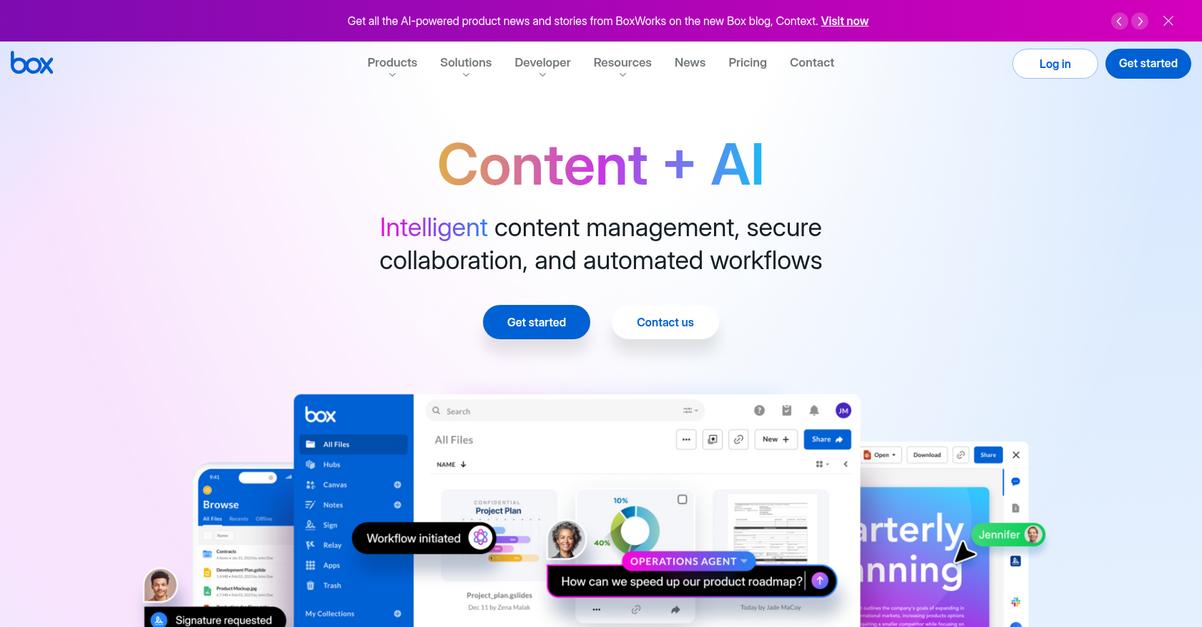
Box changes the game with its easy-to-use, cloud-native platform that lets your team securely store, share, and collaborate on business files internally or with external partners.
Instead of dealing with complex on-premise setups or mixed environments, Box puts your business files and collaboration all in one centralized cloud hub. This means you don’t get bogged with rigid workflows or confusing metadata layers that slow everyone down and make onboarding new users such a hassle.
Here’s why Box really stands out for you.
Box offers a modern cloud platform that solves key pain points for users needing a simpler alternative to M-Files.
Cloud-native by design, it delivers a unified file management workspace that’s always accessible and makes external file sharing secure and intuitive. Being able to invite clients, vendors, or partners with granular link permissions really streamlines work if you’re looking for easier, secure collaboration and faster partner responses.
Additionally, enterprise-grade security and compliance standards are built in, eliminating worries about data protection or regulatory requirements. Plus, advanced encryption and flexible access controls mean your sensitive files never get out of your hands, giving you true peace of mind.
Switching brings productivity and budget wins.
Key features:
- Enterprise Content Cloud for centralized file management enables you to store, share, and collaborate on all your business content in one secure, always-accessible location with no need for local servers.
- Advanced security and compliance certifications go above typical offerings, giving you built-in data encryption, strong access controls, and adherence to the latest enterprise cloud compliance needs.
- Intuitive external collaboration tools simplify secure file sharing with external partners, letting you control permissions and share documents quickly, without the drag of slow internal processes.
Verdict: Box is a leading M-Files alternative if you need cloud-driven file management with less complexity. Customers have reported a 332% ROI in three years, citing notably improved productivity, substantial IT cost reductions, and much smoother collaboration with clients compared to on-premises or hybrid M-Files setups.
3. DocuWare

Frustrated by M-Files’ rigid workflows and high costs?
DocuWare uses intelligent indexing powered by AI, which tackles painful manual data entry and speeds up how you process, file, and retrieve important documents.
This means you finally break away from clunky interfaces and get the efficiency boost you want. When you switch, you’ll notice more advanced document indexing and faster processing times than what you’re used to with M-Files.
Here’s where DocuWare’s strengths really stand out.
With DocuWare, you get AI-driven document capture that eliminates repetitive entry and sorts your files automatically. This alone can shave hours off your document workflow, helping your team get up to speed right away.
The advanced workflow automation lets you build visually intuitive approvals and business processes—so even complex routing or compliance steps are less of a headache. You’ll love how you can automate approvals, notifications, and process steps with just a few clicks, instead of wrestling with M-Files’ learning curve.
DocuWare also delivers rock-solid version control and audit trails. Your files are tracked every step of the way, which means staying compliant is much easier, especially if you’re in a regulated industry or need a detailed document history.
That’s efficiency your entire team can feel.
Key features:
- AI-powered intelligent indexing for document capture automatically classifies and files documents, eliminating manual metadata tasks and speeding up processing more effectively than M-Files’ manual approach.
- Integrated workflow automation with visual designer lets you create and modify approval processes, document routing, and notifications without technical expertise, improving business process agility versus M-Files.
- Granular version control and audit trails maintain a full history of document changes and access for regulatory compliance and accountability, with more detailed controls than M-Files.
Verdict: DocuWare is a top M-Files alternative if you want streamlined file management with powerful process automation. Your team can work up to 80% faster on invoice processing and compliance tasks, making DocuWare ideal for regulated, document-intensive businesses wanting more automation than M-Files allows.
4. Dropbox
Tired of clunky interfaces and rigid M-Files workflows?
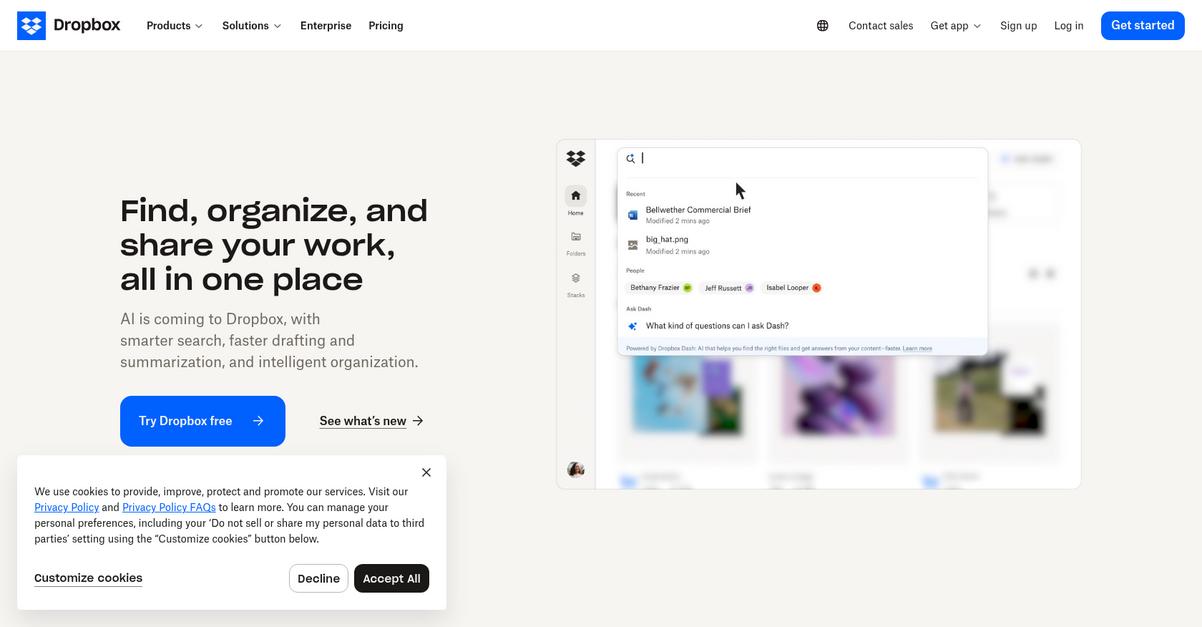
Dropbox brings hassle-free cloud file sync, simple sharing, and almost no learning curve, making it easier to adopt than M-Files’ complex, feature-heavy setup.
If you’re looking for faster onboarding, Dropbox’s easy syncing and instant file sharing remove the typical resistance to team adoption. With no intricate database configurations or steep training required, you can boost morale while streamlining your workflows.
Plus, Dropbox stays focused on cloud-first storage and collaboration, giving you that immediate simplicity.
Here’s how Dropbox helps you move forward.
The platform solves your core challenges by shifting focus from complicated document structures to truly user-friendly file access and sharing. Dropbox is designed for straightforward storage and eliminates the need for the elaborate configurations you’d expect from M-Files.
You get strong file version history that keeps a record of every change made, so restoring previous drafts is a breeze—no worrying about inaccessible past versions. Features like Smart Sync let you keep files online-only to save local storage space, so you never risk running out on your device.
Additionally, Dropbox’s cloud-first approach supports frictionless sharing, letting your team collaborate with just a few clicks. Combined with keeping files synced across every device, your workflow stays effortless.
Switching should truly make your file management easier.
Key features:
- Cloud-based file sync and sharing across devices ensures that every update appears instantly on any device, enabling collaboration without clunky M-Files repository requirements or external workflow engines.
- Automatic file versioning and recoverability means you can easily restore previous working drafts, protecting against accidental changes and offering peace of mind often missing with manual M-Files configurations.
- Smart Sync for efficient storage management reduces hard drive clutter by keeping files online-only until needed, directly addressing local storage concerns that often arise with heavier document management tools.
Verdict: Dropbox makes a compelling alternative to M-Files if you need quick, effective file management without overwhelming complexity. User reports show project completion is 60% faster and email attachments drop by 40%, making Dropbox ideal if you want effortless, scalable document workflows.
5. Google Workspace
Are rigid workflows making your file management harder?
Google Workspace packs intuitive tools like Google Drive for efficient file storage, real-time Docs editing, and built-in search that directly address M-Files’ complexity and limitations head-on.
Unlike M-Files’ rigid check-in/check-out processes, you can enjoy real-time collaboration across your documents, spreadsheets, and presentations using Google Workspace’s integrated suite. This keeps your team working together without barriers and avoids restrictive workflows.
It’s much quicker to get work done this way.
Google Workspace steps up as a smarter alternative if you want to reduce friction and confusion around managing your business-critical files.
Your team gains a productivity boost by editing together, searching instantly, and storing files in the cloud—all within a single ecosystem that’s easier to adopt than M-Files.
Here’s how Google Workspace stands apart: every user can edit Docs, Sheets, or Slides at the same time as coworkers, skipping M-Files’ frustrating file locks and waiting games. You also get search that finds any file using simple keywords, pulling results from Drive, Gmail, and more—no complex metadata queries to learn or configure here.
Additionally, all these tools sync automatically in the cloud, meaning your files are always up to date and accessible from anywhere. This broad collaboration suite not only boosts productivity but also overcomes M-Files’ steeper learning curve and high cost.
That’s a major win if you want hassle-free document management.
Key features:
- Integrated Google Drive storage and collaboration provides generous cloud storage combined with real-time team editing tools, removing the complexity of managing documents with separate applications like you often find with M-Files.
- Industry-leading search across your entire Workspace lets you use Google’s natural-language search to instantly locate files, messages, or attachments without learning special metadata tags or navigation structures.
- Real-time editing with Docs, Sheets, Slides enables multiple users to make changes together at once, enabling more fluid teamwork and reducing bottlenecks from file check-ins or version conflicts.
Verdict: Google Workspace is a compelling M-Files alternative for streamlining your file management software. You’ll benefit from intelligent search, integrated collaboration, and up to 30% higher productivity by switching, making it easier for your team to organize, share, and find files without wrestling with M-Files’ learning curve.
6. Hightail

Overwhelmed by M-Files’ limitations with creative files?
Hightail offers secure large file sharing, intuitive visual feedback tools, and robust access tracking—all built for creative workflows that often struggle with M-Files’ rigid approach.
Where M-Files users hit roadblocks handling media assets, you’ll find Hightail’s large file delivery and feedback tools simplify the entire process over restrictive document databases and cumbersome approval chains.
You’ll experience real workflow freedom here.
Unlike classic file management tools, Hightail steps in as your powerful file-sharing ally if you deal with massive videos, photos, or design documents. Its user-friendly platform is purpose-built, making collaboration less about technical hurdles and more about productivity.
Here’s how Hightail takes your creative collaboration problems off your plate.
Forget fighting with M-Files when it comes to huge file transfers—Hightail lets you send, receive, and track massive media files securely with a few clicks. You can gather pinpoint-accurate feedback and signoffs directly on file previews in one place, ensuring nothing gets lost in email chains or version chaos.
Have sensitive material? You’ll love Hightail’s detailed access tracking and granular sharing controls, so you always know who accessed your files and when—delivering next-level peace of mind compared to M-Files’ generic document security.
Combining large file sending with visual feedback, Hightail ensures your next project gets moving sooner.
Key features:
- Secure large file sharing for media assets lets you send and receive enormous files without the complicated workarounds required in M-Files, streamlining creative content delivery every step of the way.
- Visual review and approval tools for creatives allow your stakeholders to add precise feedback directly on files, making review cycles faster and less confusing than M-Files’ generic workflows.
- Detailed access tracking and advanced sharing controls put you in charge of who sees your sensitive work, giving more transparency than typical document management software.
Verdict: Hightail is a potent M-Files alternative, especially for creative file management. Its built-in large file transfer, visual approvals, and granular access tracking address the most common struggles when moving from M-Files. If your projects hinge on creative collaboration, Hightail makes every review, share, and handoff faster and simpler.
7. Laserfiche
Is M-Files making your processes a little too rigid?
Laserfiche introduces advanced records management and visual process automation features, tackling what M-Files users often cite: lack of flexibility and limited compliance options.
Unlike M-Files, Laserfiche empowers you with specialized compliance controls and lifecycle management designed for strict regulatory environments. This makes a major difference for anyone worried about audit risks or scalability headaches in their file management.
Let’s dig deeper into what sets Laserfiche apart.
Laserfiche stands out by letting you streamline complex document operations without the high costs and complications you might associate with M-Files.
Here’s how: Laserfiche offers enterprise-grade records management, robust business process automation, and intelligent capture tools—each feature built to overcome common frustrations with M-Files’ interface and workflow limits.
If you’re tired of clunky processes, Laserfiche’s visual workflow designer lets you orchestrate and automate procedures without needing deep programming knowledge. Plus, you get AI-powered OCR that digitizes and extracts data even from paper or scanned files, a capability that outperforms standard OCR found in M-Files and accelerates daily intake work.
Additionally, Laserfiche provides end-to-end compliance support, workflow automation, and advanced data extraction—all in one platform. These bring your team scalability and peace of mind, making the switch from M-Files an investment in productivity.
You don’t have to settle for inefficiency anymore.
Key features:
- Enterprise-grade compliance and records management provides lifecycle controls that help your team meet regulatory requirements with more precision and ease than M-Files’ standard features allow.
- Visual business process automation suite lets you design and automate complex workflows using drag-and-drop tools—reducing learning curves compared to M-Files’ more technical workflow setup.
- AI-powered intelligent capture and OCR quickly digitizes, classifies, and extracts data from all document types, improving data accuracy and saving you hundreds of hours on manual entry.
Verdict: Laserfiche should be on your shortlist if you want a file management software that makes document automation and compliance simpler than M-Files. Laserfiche customers have reported up to 80% faster document processing and a 50% reduction in annual operating costs—clear proof it’s a smart upgrade for serious records and process needs.
8. Revver

Looking for a M-Files alternative that feels simple?
Revver lets you organize files using drag-and-drop folders—no more learning complex metadata rules or fighting rigid file structures like in M-Files.
By using drag-and-drop filing, you get a more intuitive folder structure your team can recognize immediately. Automated routing and full-text search remove manual bottlenecks and help you move away from tedious M-Files workflows.
Revver’s drag-and-drop system means less time training staff.
Here’s how Revver takes this further.
With Revver, you manage files in an interface that actually makes sense for small and midsize businesses. The familiar folder layout lets your team organize and find documents without struggling through M-Files’ database-heavy setup.
You’ll also benefit from automated document routing that keeps approvals moving, so your documents always end up with the right people—no complicated configuration needed like with M-Files. Switching becomes a smoother experience, especially if your workflows aren’t huge or highly customized.
Add to that powerful full-text search across your document library, letting you find what you need in seconds just by typing keywords. Pairing this with intuitive filing gives your team both speed and clarity they always wanted in M-Files.
You get more control and less hassle.
Key features:
- Intuitive drag-and-drop folder organization creates a familiar environment for your documents, so your team avoids the metadata setup headaches common with M-Files and gets working right away.
- Automated document routing for reviews and approvals ensures documents are sent to the right people automatically, making basic workflows easy for your team to adopt and reducing manual handoffs.
- Fast full-text document search across all files allows you to find documents by searching not just titles, but content and custom tags, eliminating the need for complex tagging setups.
Verdict: Revver is a robust alternative to M-Files if you want file management software that’s easy to use and doesn’t bog your team down. Its drag-and-drop filing, automated routing, and powerful search make switching pain-free—even when you want immediate productivity gains for your business.
9. PandaDoc

Tired of M-Files making your workflow harder?
PandaDoc delivers effortless document creation, integrated e-signatures, and a content library that directly address M-Files’ clunky interface and lack of sales-ready tools.
This means you’ll use purpose-built templates for proposals and contracts—features not offered natively by M-Files. Your entire document management process becomes smoother and much more focused.
If you’re frustrated by manual assembly and slow reviews, PandaDoc’s built-in e-signatures and reusable templates save hours each week for your team while boosting efficiency.
Here’s where PandaDoc stands apart.
With PandaDoc, you get a true alternative for commercial document management that makes up for M-Files’ generalist limitations.
Intuitive document generation is at the core, so you can create contracts, proposals, and quotes using flexible templates tailored to your brand. This isn’t just faster—your documents look more professional and on-brand every single time.
What really makes a difference is the content library, letting you reuse approved blocks and streamline new projects. If you’re dealing with sales or HR files, you’ll assemble documents much more quickly than copying and pasting in M-Files.
Additionally, integrated e-signatures let you send, track, and securely complete deals in one workspace. The result is a document management workflow built for real business impact, rather than just general file storage.
PandaDoc helps you work smarter and close deals faster.
Key features:
- Customizable document templates for proposals, contracts, sales let you bypass manual formatting, so you can create and send documents 65% faster compared to building them from scratch in M-Files.
- Integrated legally binding e-signatures workflow means your team collects signatures, tracks completion status, and finalizes contracts without additional software, removing bottlenecks common in M-Files.
- Reusable content library accelerates document creation by storing your approved snippets, letting you quickly assemble on-brand, compliant documents for sales, HR, or client onboarding—no more starting from zero.
Verdict: PandaDoc stands out as an M-Files alternative if you want file management tailored for business documents, not just storage. You can expect to create documents up to 65% faster and even double your closed deal rate, thanks to purpose-built templates and e-signatures that M-Files just doesn’t offer.
10. OpenText
Frustrated with rigid workflows and excessive complexity?
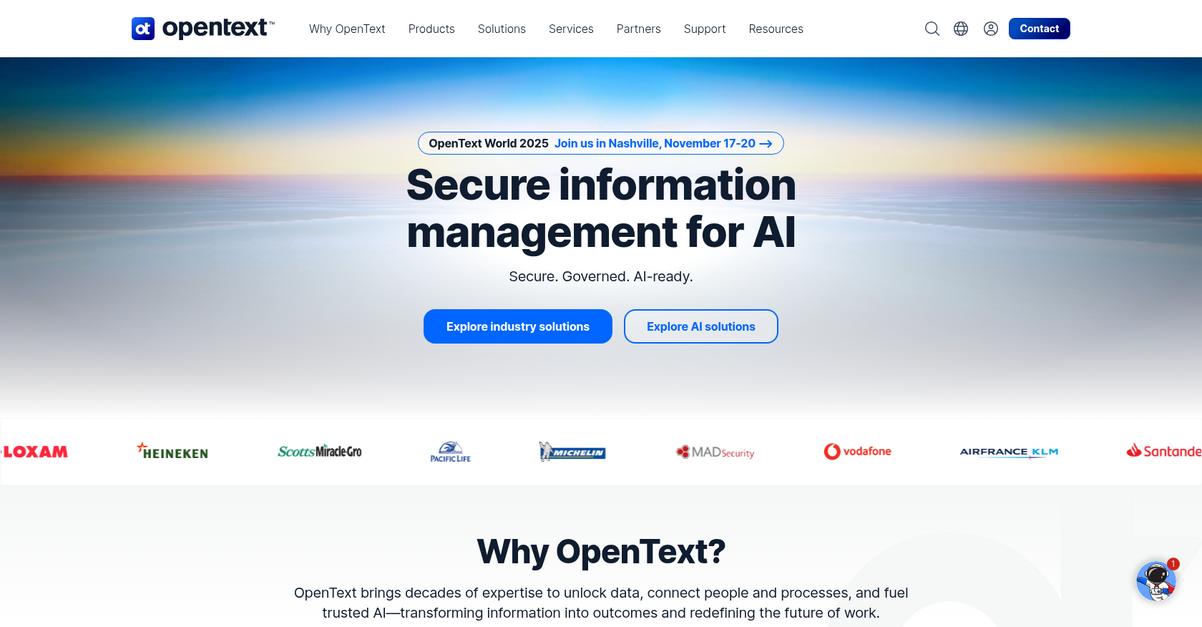
OpenText brings advanced enterprise content management, robust information governance, and AI-powered automation to address roadblocks M-Files users commonly face with scalability and usability.
Your team gains true end-to-end content management, connecting multiple information silos with enterprise-grade governance, security, and compliance automation baked into every stage of the document lifecycle.
With OpenText, those migration headaches and inflexible processes become a thing of the past.
Here’s how OpenText becomes a real solution.
This platform manages and governs content across all your business systems, no matter the size, giving your files the full control and flexibility M-Files often falls short on for large-scale needs.
You can easily automate retention, legal hold, and compliance policies, while AI-powered insights let your team discover critical information right when needed, something you simply won’t get at this depth with M-Files.
Additionally, OpenText’s advanced analytics and automation simplify process optimization, meaning you can boost operational efficiency and compliance without adding more admin burden.
The result is a smarter, future-proof document ecosystem.
Key features:
- End-to-end enterprise content management connects and manages content across disparate systems, ideal for large organizations needing visibility and control beyond what M-Files typically offers.
- Advanced information governance and policy enforcement delivers rigorous automation for retention, legal holds, and compliance—crucial for industries with strict regulatory requirements or massive content sprawl.
- Integrated AI and analytics for smarter file management brings intelligent content discovery and process optimization, providing actionable insights and automation beyond M-Files’ standard workflows.
Verdict: OpenText is a top M-Files alternative if your file management demands extend to enterprise scale. Organizations switching have reported 20-30% efficiency gains and lower compliance costs, making OpenText especially powerful if you want tighter control, smarter automation, and cost-effective scalability.
Conclusion
Ready for a smoother document management experience?
M-Files often slows you down with its confusing interface, rigid processes, and rising costs—making daily file tasks feel more like obstacles than solutions.
Choosing a better document management tool can seem daunting, but escaping M-Files’ complexity is absolutely worth it when your business needs flexibility, ease, and affordability.
Let’s talk about the best upgrade.
I truly think FileCenter is the clear winner when you want to ditch M-Files hassles for something more straightforward and budget-friendly.
What I love about FileCenter is how it streamlines file organization with a familiar folder structure—no steep learning curve, just instant productivity. For frustrated M-Files users, it’s a breath of fresh air and an easy switch.
Go ahead and start your free trial of FileCenter to see the difference in minutes.
You’ll gain clarity, speed, and peace of mind.