

Struggling with Microsoft Purview’s clunky workflows?
You’re probably frustrated by the confusing setup, lack of integrations outside Microsoft’s ecosystem, and a user experience that just doesn’t make sense for records management.
These headaches can sap your team’s energy and focus when you just want a records management tool that works the way you do.
Over time, these problems wear down team morale, cost precious hours to manual workarounds, and increase the risk of compliance gaps or lost records. When your software is slowing you down, every day you keep using Microsoft Purview feels like a setback instead of progress.

The good news is there are better options. You can find a solution that actually simplifies work, fits your existing tech stack, and wins over your team.
In this article, I’ll show you the best Microsoft Purview Records Management alternatives that tackle the core issues current users face—reviewing leading records management options like FileCenter, Laserfiche, Box, and more.
Switching to the right tool means more intuitive workflows, happier teams, and pain-free compliance.
Let’s explore your options.
Quick Summary:
| # | Alternative | Rating | Best For |
|---|---|---|---|
| 1 | FileCenter → | Small teams seeking simplicity | |
| 2 | Laserfiche → | Users needing robust compliance | |
| 3 | OpenText Content Manager → | Teams managing physical & digital | |
| 4 | DocuWare → | Users wanting smarter automation | |
| 5 | M-Files → | Users needing intuitive search |
1. FileCenter

Overwhelmed by Microsoft Purview’s complexity and setup?
FileCenter makes document management much more approachable, offering simple Windows folder-based organization, one-click scanning with OCR, and a predictably priced perpetual license—all areas where Microsoft Purview Records Management often falls short for small teams.
By using familiar folder structures, FileCenter lets you avoid complicated compliance modules and rigid workflows entirely. This means you can just get started, with minimal onboarding or retraining slowing your progress.
You don’t have to settle for complexity.
FileCenter steps in as a strong Microsoft Purview Records Management alternative by focusing on ease of use from day one.
The core “electronic filing cabinets” use your existing Windows folders and let you access all your files directly—no database lock-in or confusing compliance screens. If you’re digitizing paperwork, FileCenter’s one-click scanning and automatic OCR naming gives you instant searchable documents without tedious manual entry. Your workflow becomes as natural as dragging files where you want them, ideal if you’re used to a standard Windows setup.
Additionally, FileCenter is a smart choice if you want to control your costs. Its perpetual license option means you can own the software outright, which eliminates recurring enterprise subscription fees and allows for predictable budgeting. This combination of simplicity and affordability transforms how your team manages records after Microsoft Purview.
Everything is focused on making records management easy.
Key features:
- Windows folder-based cabinet organization empowers you to structure documents intuitively, removing the need for complex compliance modules and database silos you see in Purview.
- One-click integrated scanning and OCR tools convert your paper documents to searchable digital records instantly, reducing manual steps and accelerating your move from legacy files.
- Perpetual licensing alongside subscriptions lets you buy FileCenter outright, eliminating ongoing recurring costs and streamlining budgeting for your records management capabilities.
Verdict: FileCenter is a compelling Microsoft Purview Records Management alternative if you want efficient records control without enterprise confusion. Users have condensed a week’s worth of paperwork into 15 minutes using its OCR and organization features. That’s a huge win if you value time savings and intuitive migration.
2. Laserfiche

Tired of Purview’s limitations holding you back?
Laserfiche brings intuitive records management, with certified compliance and automated workflows designed to tackle what Microsoft Purview Records Management often misses—especially when you need robust cross-platform support.
Here’s why Laserfiche stands out: you get DoD 5015.2-certified governance, visual workflow automation, and fine-grained retention policies that Microsoft Purview Records Management struggles to match. That translates to deeper control, less manual work, and rock-solid compliance reporting straight out of the box.
If you’re looking for confidence and ease, this really matters.
Laserfiche shows you what better records management looks like.
With Laserfiche, your team gains more than a replacement for Microsoft Purview Records Management. You get advanced lifecycle management, drag-and-drop automation, and compliance power—so records stay controlled from creation to destruction.
Think of what this means for your daily work: automated approvals, easy search, and reusable retention policies save your team real time while minimizing costly errors. Laserfiche’s visual workflow tools outperform Purview’s more rigid, M365-bound processes—especially if you need to fit records into broader, non-Microsoft systems.
Plus, you can confidently configure event-based triggers and legal holds to enforce compliance automatically, not manually. The result is policy enforcement that’s consistent and easy for your team, even as your requirements change.
Now, your records management setup just works.
Key features:
- DoD 5015.2-certified, highly defensible compliance controls ensure your recordkeeping meets even the toughest legal and industry requirements—well beyond what Microsoft Purview Records Management typically covers.
- Visual drag-and-drop workflow automation tools unlock time-saving automation across approval, review, and audit trails, cutting down manual process pain for your records team.
- Configurable retention and event-based lifecycle policies manage records from capture to disposition, avoiding inconsistent item-by-item rule setup and reducing the risk of costly compliance slips.
Verdict: Laserfiche is a proven Microsoft Purview Records Management alternative if you need compliance, automation, and real lifecycle control. Use cases show organizations cut redundant storage by 30%, streamline audits, and avoid regulatory fines thanks to robust, policy-driven records management beyond the limits of Microsoft 365-centric tools.
3. OpenText Content Manager
Feeling boxed in by rigid Microsoft Purview workflows?
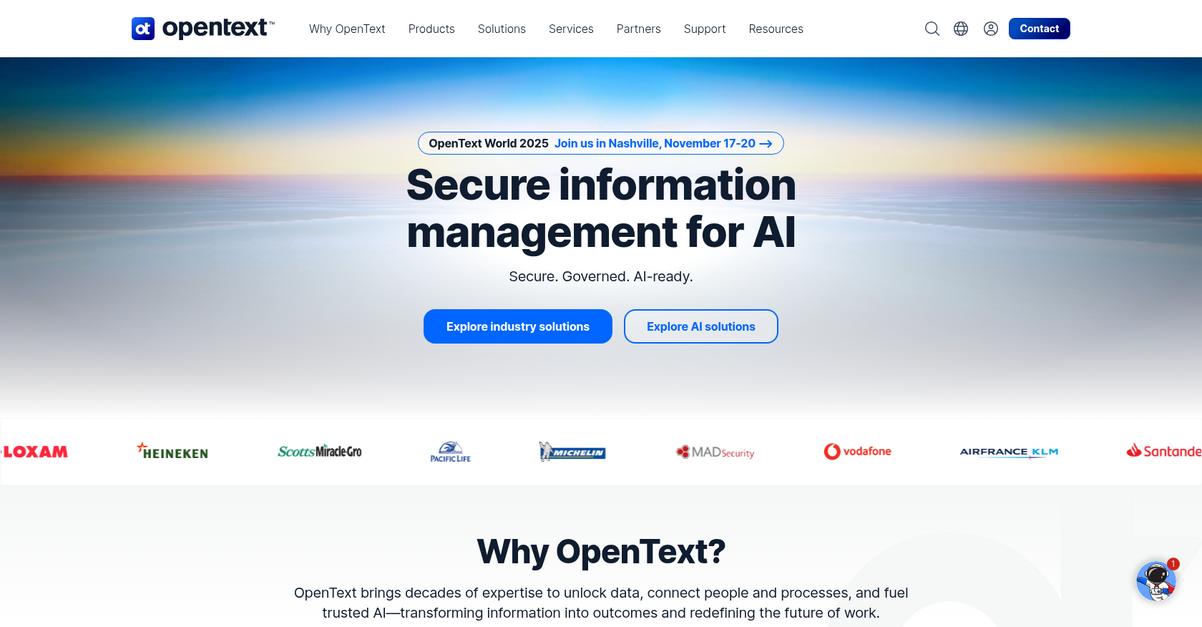
OpenText Content Manager brings robust, certified compliance and unified management for both digital and physical records— tackling the limitations Microsoft Purview struggles with in hybrid, regulated environments.
This means you get auditable, defensible controls that cover your highest-risk record types while avoiding the integration headaches and gaps found in Purview. Additionally, OpenText improves overall governance by including physical files and non-digital formats under the same umbrella as your electronic documents. The result is a holistic approach, giving you peace of mind on compliance no matter where your records live.
Ready to see what sets OpenText apart?
With OpenText Content Manager, your team can handle records governance across multiple systems and formats, not just Microsoft 365 files. The platform’s DoD 5015.2 certified compliance is a game changer if you’re under strict regulatory pressure—plus, you can automate record-keeping policies with granular, context-aware controls instead of just basic document labeling.
You also get physical records management built right in, streamlining paper and microfiche alongside your digital assets from day one. That means you’re not forcing “all-digital” changes, but adapting smoothly—key for organizations with deep legacy records.
Flexible retention scheduling lets you apply different rules at the document or folder level, so migration from Purview’s rigid labeling is easier and safer. Combining all these features helps your team boost transparency, reduce compliance risk, and make buy-in easier.
Your regulatory and workflow gaps get solved.
Key features:
- DoD 5015.2 certified, auditable compliance gives you government-grade controls for all records, surpassing Microsoft Purview’s native certification and providing a defensible compliance foundation for regulated sectors.
- Comprehensive physical and digital records management consolidates physical files, microfiche, and electronic content in a single platform, sparing your team from juggling separate systems.
- Granular retention and disposition scheduling lets you automate complex, context-based governance at scale, beyond the basic document-level policies of Microsoft Purview’s labeling.
Verdict: OpenText Content Manager stands out as a top Microsoft Purview Records Management alternative if you need robust compliance and cross-platform support. Its DoD 5015.2 certification and unified physical/digital governance drives higher regulatory confidence and has helped reduce audit prep time by 35% for enterprise users—ideal for your complex records management needs.
4. DocuWare

Frustrated by clunky setup and limited integrations?
DocuWare addresses the core shortcomings you face with Microsoft Purview Records Management by offering intelligent document processing, workflow automation, and broad application integration designed specifically for frictionless records management across your entire business.
This means your team gets reliable AI-powered data extraction and automated document classification, saving you manual entry while delivering higher accuracy and consistency. You’ll notice reduced user frustration around file searching, data entry, and record retention processes because DocuWare handles all kinds of document types more effectively than Microsoft Purview.
Here’s how DocuWare can help your record keeping.
With DocuWare, you can efficiently migrate from Microsoft Purview Records Management while getting customizable workflow automation and cross-platform integration your team was likely missing before.
For starters, DocuWare’s intelligent document processing uses AI and OCR to automatically extract and classify your records – no matter the source, automating error-prone indexing tasks previously done by hand. This gives you reliable search and audit ability from day one with data accuracy you can trust.
Additionally, you’ll gain customizable, rule-based workflow automation so approvals, invoice handling, and retention schedules flow exactly the way your business works. Throw in direct integration with over 500 leading business apps—ERP, CRM, and accounting tools included—and your team’s entire document workflow finally feels unified and streamlined.
Everything is built to accelerate adoption and reduce process headaches.
Key features:
- Intelligent document processing with AI and OCR identifies, extracts, and classifies data from any file type, drastically reducing manual entry and user error compared to Microsoft Purview’s basic tools.
- Customized workflow automation for approvals and retention gives you the flexibility to adapt document hand-offs to your unique business needs—no more one-size-fits-all workflows that slow progress.
- Over 500 business application integrations included so you’re not locked into the Microsoft ecosystem; your records connect to ERP, CRM, and more for enterprise-wide compliance and efficiency.
Verdict: DocuWare stands out as a best-in-class alternative to Microsoft Purview Records Management if you want faster and far less complex migration—users report invoice processing is up to 65% quicker and approval delays are cut by 40% after switching. Its AI-driven document processing, customizable workflows, and wide integrations tackle your real bottlenecks head-on.
5. M-Files
Is Microsoft Purview Records Management just too restrictive?
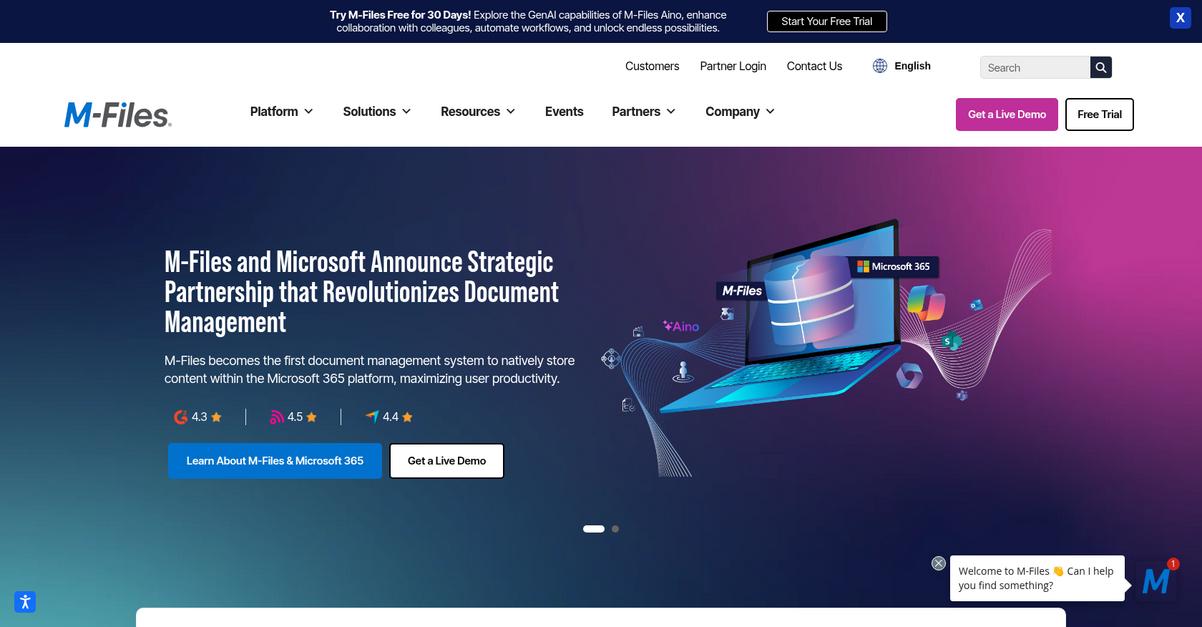
M-Files addresses core Microsoft Purview Records Management frustrations by organizing information with metadata rather than folders, connecting data from SharePoint, network drives, and other systems you already use—no complex migrations required.
Unlike Microsoft Purview, M-Files lets you find anything intuitively across every repository, even if your records are scattered or your department uses non-Microsoft systems. This means your team finally gets a records management solution that doesn’t force you into rigid workflows.
You can finally escape those ecosystem limitations.
Here’s how M-Files actually solves these headaches as an alternative to Microsoft Purview Records Management.
Instead of locking your content in folders, M-Files uses metadata-driven management so you can instantly locate documents by context, project, or property. It works behind the scenes to unify content, and integrates with data in SharePoint, network folders, and other key business apps—so your information stays connected and accessible for everyone.
Plus, M-Files can automatically declare records and apply retention policies using document metadata and rules you define. This cuts out manual tagging, keeps you compliant, and makes transitions from Microsoft Purview Records Management smoother for your team.
If you want to boost process efficiency, M-Files delivers up to 70% better workflows and helps your team find information 50% faster.
M-Files could be the missing link for you.
Key features:
- Metadata-driven content organization for intuitive search replaces folder-based silos with content organized by properties, helping your team instantly find records from any repository or connected system.
- External repository connectors unify fragmented information by bringing SharePoint, network drives, and other data sources into one view—so you avoid migrations or workflow disruptions Microsoft Purview can trigger.
- Automated record declaration and retention rules use metadata and custom rules to reduce manual effort and mistakes, keeping your records compliant and policies enforced with minimal admin work.
Verdict: M-Files shines as an alternative to Microsoft Purview Records Management by making records instantly discoverable, supporting external platforms, and automating compliance. Proven results like 70% higher process efficiency and 50% faster information retrieval show why switching to M-Files changes records management for your team.
6. DocuPhase
Complex setup keeping you from moving forward?
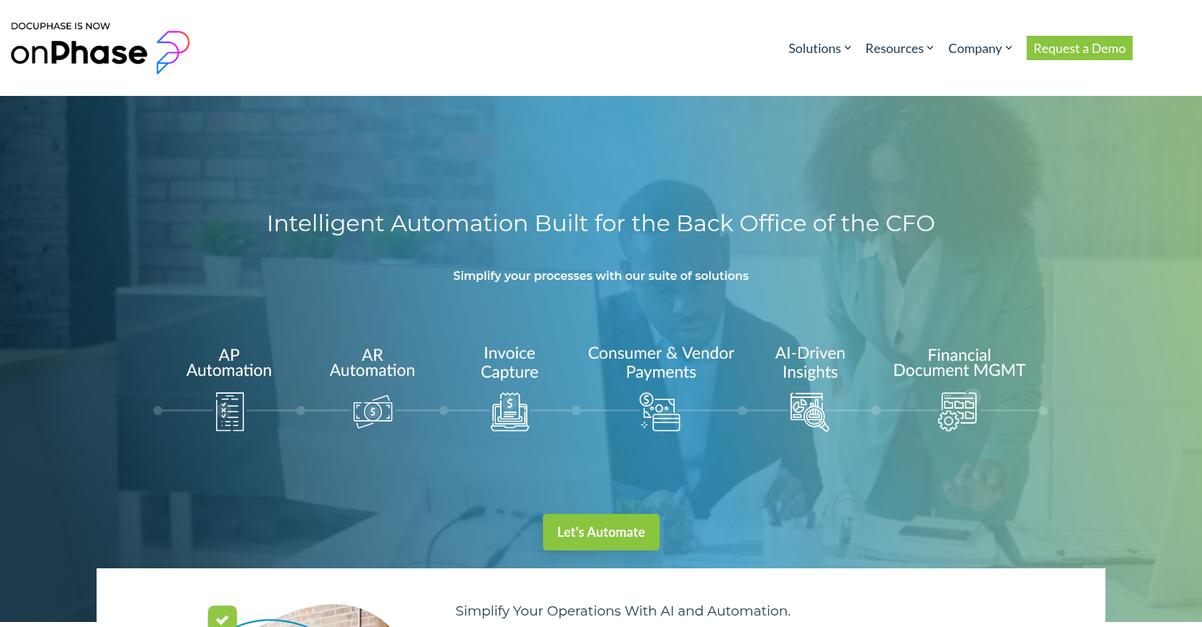
DocuPhase takes document automation a step further with intelligent data capture using AI-powered OCR, advanced forms, and robust workflow automation—areas where Microsoft Purview Records Management often falls short.
You’ll notice that DocuPhase handles automatic data extraction without the heavy manual work. This means your team spends less time correcting errors and managing paperwork compared to Microsoft Purview Records Management, which limits you to basic classification and mostly manual processes.
The result is streamlined efficiency you can measure.
DocuPhase addresses the roadblocks Microsoft Purview Records Management users complain about by making automation, data capture and process optimization central— not afterthoughts.
It begins with AI-powered document capture that reads and extracts data from any file type, sparing you tedious manual entry and reducing mistakes. You’ll also benefit from customizable electronic forms that capture business data right at the source, which DocuPhase integrates directly into your document workflows—unlike Microsoft Purview Records Management’s disconnected approach.
This deep level of process automation doesn’t just save you a few steps—it allows you to fully build custom workflows for approvals, document routing, and retention. If your needs change, adapting flows is quick, so your business stays agile even as records requirements shift.
You’ll see how these strengths come together to deliver real, daily relief.
Your team finally gets the efficiency and flexibility you’ve been missing.
Key features:
- AI-powered data extraction (OCR) automatically captures and interprets information from incoming business documents, overhauling manual entry and reducing errors compared to basic Microsoft Purview records classification.
- Drag-and-drop workflow automation tools let you build and tailor document approval and routing processes to fit your company’s operations, enabling organizational agility far beyond Microsoft Purview’s retention-focused rules.
- Integrated web-based forms for direct data capture and seamless onboarding of new records, gathering information right at the source instead of managing forms separately as with Microsoft Purview Records Management.
Verdict: DocuPhase tops the list of best Microsoft Purview Records Management alternatives if you demand real automation. On average, DocuPhase users report saving over 50 work hours per month, especially in finance and HR—thanks to robust OCR and process automation you just don’t get with Microsoft Purview.
7. Box Governance
Seeking something less rigid than Microsoft Purview?
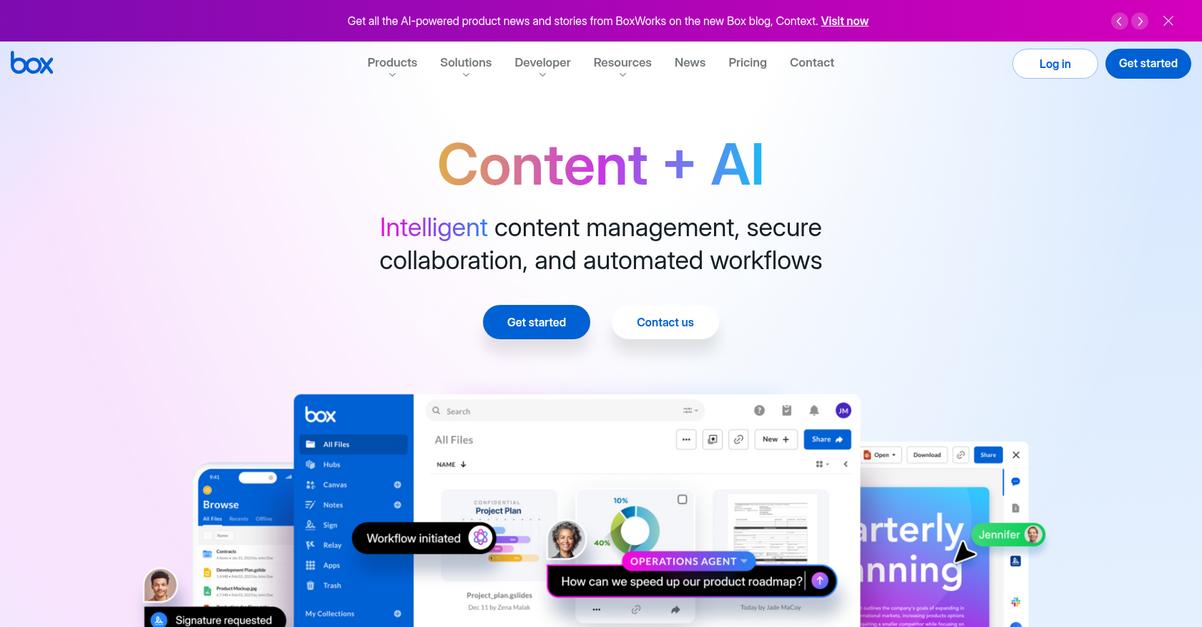
Box Governance tackles the hassle with flexible retention schedules, granular deletion controls, and plug-and-play integrations that cover far more ground than just the Microsoft ecosystem.
If you’ve wrestled with Purview’s strict labels or struggled to adapt to future compliance needs, Box Governance steps in with flexible retention schedules, granular trash controls, and robust eDiscovery connections. This lets your team safeguard records however your industry, clients, or regulators expect—without wrestling with confusing configurations.
This means migrating doesn’t have to feel overwhelming.
With Box Governance, you get a true alternative that empowers your team to manage content securely while avoiding unnecessary friction.
Box Governance introduces flexible retention policies your records managers crave, letting you apply rules globally or down to the file level, whether for regulatory compliance or unique business needs.
Here’s how it raises the bar—you’re not locked into Microsoft-centric integrations or forced to use structured, inflexible labels. Box lets your team configure event-based triggers and custom retention durations for every scenario, which keeps you agile when requirements change.
Granular trash controls give you command over who deletes information and how deeply deleted content can be recovered, limiting risk and helping you run defensible disposal processes when needed.
Plus, integrating with best-in-class eDiscovery solutions means you keep your legal and compliance teams happy, while reducing hold and discovery headaches.
You finally get control without complexity.
Key features:
- Flexible retention and disposition scheduling empowers your records team to configure schedules globally, by folder, or file, with event-based triggers—much more adaptable than the rigid labels in Microsoft Purview.
- Granular trash permissions and unlimited version history allow you to manage permanent deletions and defensible retention, helping with risk reduction and disaster recovery that feels less restrictive.
- Direct eDiscovery integrations for legal holds connect Box with external eDiscovery tools, offering lawyers deeper data preservation and review capabilities than Purview’s bundled approach.
Verdict: Box Governance stands out as a best Microsoft Purview Records Management alternative for records managers focused on compliance, risk reduction, and scalability. Its flexible schedules, granular controls, and eDiscovery integration help your team lower legal risk and simplify records management, especially if you want broad integration outside Microsoft 365.
8. Revver

Is Microsoft Purview Records Management holding your team back?
Revver tackles common Purview pain points with helpful features like an intuitive no-code workflow builder, powerful AI-based document extraction, and secure client portals for sharing and collaboration.
Unlike Purview, your team won’t waste hours on tricky setups or struggle with limited integrations. Revver’s drag-and-drop workflows make process automation easy for everyone, while next-level AI means better accuracy in tagging and searching your records.
This means switching gives you a smoother experience.
Revver’s approach combines automation with user-friendly design, making it a smooth alternative to Microsoft Purview Records Management for eliminating record chaos and frustration.
By letting you automate workflows with a true no-code tool, Revver removes the complexity that slowed your team down in Purview. The Smart Extract AI recognizes and tags metadata without manual work, so your records stay organized and are much easier to find when you need them. Secure client portals let you work with anyone outside your company while keeping sensitive files safe.
Plus, the combination of powerful automation and a simple interface helps you boost compliance and cycle times from day one, making the switch from Purview less daunting than you’d expect.
You can finally simplify records management the way you want.
Key features:
- No-code workflow builder for approvals and automation empowers your admins and users to design automated records processes much faster than Purview’s configuration-heavy approach.
- AI-powered metadata extraction and organization means fewer manual touchpoints and improved search/reporting accuracy, fixing the typical headaches of Purview’s less advanced classification.
- Secure, customizable client portals for file sharing let you collaborate confidently with partners and clients, which is a substantial upgrade in external document management compared to Purview.
Verdict: Revver is a standout Microsoft Purview Records Management alternative, especially if you want powerful automation with real ease of use. With drag-and-drop workflows, AI-powered document management, and secure portals, Revver helps small and mid-size businesses speed up compliance processes and gain better control over their records—without a steep learning curve.
9. FileHold
Tired of complicated compliance in Microsoft Purview?
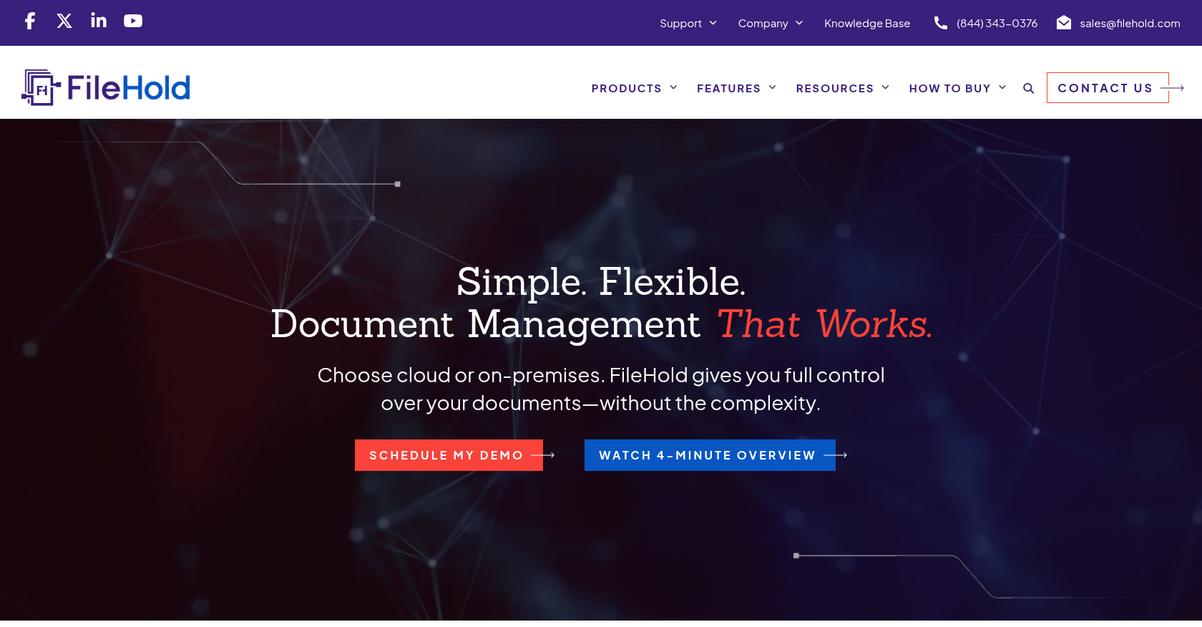
FileHold takes records management to the next level with DoD 5015.2-compliant automation, full audit trails, and both cloud or on-premise options—no Microsoft lock-in or convoluted setup.
You get a true alternative that’s purpose-built for stringent compliance and direct, granular auditability of every user action. This means FileHold solves the frustration of limited reporting, rigid integrations, and confusing policy setup you get with Microsoft Purview Records Management.
If you’re committed to upholding bulletproof retention and traceability, FileHold bridges the compliance gaps left by Microsoft Purview.
Let’s look at why it works better.
FileHold meets government-grade standards for records management, automating defensible retention and disposal so you never have to worry about missed compliance gaps again.
Unlike Microsoft Purview, your team benefits from a tamper-proof audit log that captures every event, providing clear defensibility for legal discovery or regulator review. Everything is built for transparency, letting you quickly find any action if records are ever challenged.
Additionally, you can decide between a secure cloud setup (if you like Azure) or a true on-premises install, so your infrastructure preferences are covered without compromise. This flexibility adds confidence if you need tight data residency, scalable policy management, or more control than Microsoft Purview Records Management allows.
Your records become assets instead of sources of risk.
Key features:
- DoD 5015.2-certified records management automation guarantees bulletproof, auditable retention schedule enforcement, meeting compliance requirements well beyond what’s possible within standard Microsoft Purview workflows.
- Comprehensive, tamper-proof audit trails and security deliver unalterable logs of all user and system activity, improving defensibility for legal holds and regulatory reviews compared to basic Microsoft trails.
- Flexible deployment: cloud Azure or on-premises options allow alignment with your infrastructure, letting you dictate where sensitive records live, addressing data residency and control concerns Microsoft Purview can’t.
Verdict: FileHold gives you a real Microsoft Purview Records Management alternative, offering both DoD-level retention automation and granular security logs. With flexible cloud or on-premises installs and proven compliance outcomes—like reducing discovery risk and regulator penalties—FileHold is a perfect fit when you need more control and transparency.
10. Access
Tired of limited integration and confusing workflows?
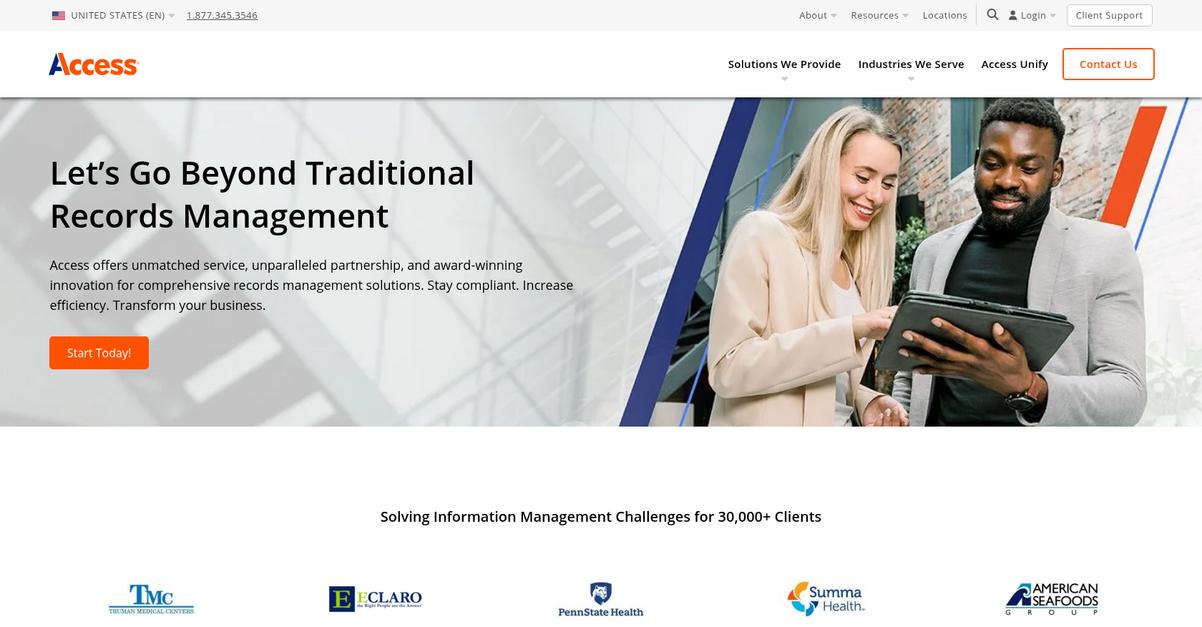
Access is designed to overcome Microsoft Purview Records Management’s biggest pain points by unifying physical and digital records management plus offering advanced compliance features you won’t find with Microsoft.
With Access, you get hybrid records management that’s easy to use, supporting your team as you handle mixed formats and avoid Purview’s digital-only restrictions. Plus, you can count on an intuitive interface with unified views and AI indexing to streamline searching and retrieval, directly addressing the day-to-day headaches users face.
The result is a platform that actually aligns with your real-world needs.
Access stands out by delivering a holistic solution for your records management frustrations.
Where Microsoft Purview Records Management stumbles with limited integration and fragmented workflows, Access Unify lets you manage physical files and digital documents side by side, all from one secure portal. The AI-powered indexing feature brings everything together in a searchable, easy-to-navigate dashboard, eliminating the confusion of switching between multiple systems just to find critical records.
Additionally, the Virgo Privacy & Retention Solution supports you with in-depth legal and regulatory research tools, so you don’t have to manually chase compliance changes. Secure destruction services round out the package, giving you confidence that every record—no matter the format—is tracked and defensibly disposed of when it’s time.
That way, your team gets efficiency and peace of mind.
Key features:
- Hybrid management of physical and digital records provides a single view for paper and digital files, overcoming Microsoft Purview’s limitations for companies juggling mixed information formats.
- AI-powered indexing for fast retrieval allows you to search and manage all your records quickly, regardless of where or how they’re stored, reducing time spent locating important documents.
- Built-in retention and privacy intelligence maintains up-to-date retention schedules and compliance links automatically, supporting your compliance goals with legal research capabilities Microsoft Purview doesn’t include.
Verdict: Access is an ideal alternative to Microsoft Purview Records Management if you need unified control over both digital and physical assets, advanced compliance intelligence, and secure destruction services. It’s a strong fit for companies transitioning from complex, fragmented solutions and prioritizing complete information governance.
Conclusion
Tired of Microsoft Purview’s confusing setup?
If you’re stuck wrestling with limited integrations, frustrating workflows, or poor usability, you know it’s time to seek a records management solution that just works for your team.
Switching platforms is never simple, but finding a tool that actually saves your team time pays off quickly and boosts morale far more than sticking with what isn’t working.
Here’s what I recommend.
Of all the best Microsoft Purview Records Management alternatives I’ve reviewed, FileCenter is the clear standout if you want easy, intuitive records control and real productivity gains.
What makes FileCenter my top pick is its seamless desktop-first design—unlike Microsoft Purview, your team can quickly organize, scan, and manage records without a steep learning curve or constant IT headaches.
Give FileCenter a try—start a free trial today—and get hands-on with document management that actually fits.
Make records management easy again.